Guide on Tornado Essay: Causes, Effects, and Dangers
This comprehensive guide covers everything you need to know to craft a compelling tornado essay.
Eric Stelee
Mar 16, 2023
Guide on Tornado Essay
Writing an essay on tornadoes can be challenging for students, since it calls for a solid grasp of the subject and the capacity to organize their thoughts. However, a guide on tornado essays can provide students with a clear direction on approaching this task. To create a high-quality tornado essay, students should begin by conducting extensive research on the topic, including the causes, effects, and historical occurrences of tornadoes. A tornado essay for students can be an excellent opportunity to showcase their research and writing skills while learning about one of nature's most destructive forces.
This guide will provide tips on how to research and gather relevant information on climate change while offering helpful advice on how to structure and format a tornado essay example.
Tornado Essay Step by Step
Writing a tornado essay can be a fascinating and informative task. The key to creating a successful essay tornado is to begin by researching the topic thoroughly. To gather information and evidence for supporting your argument, always look for different credible sources, such as books, journals and trustworthy websites. Next step is to choose which type of essay you’re going to write. Want it to be persuasive or informative? On what will you focus - tornadoes’ impact on people and communities or the science behind it? Once you've determined your essay's purpose and focus, create a concise thesis statement summarizing your main points.
Consider incorporating personal experiences, eyewitness accounts, or interviews with experts in the field to add depth and credibility to your writing. But if you have an upcoming deadline for your tornado essay and don't feel like writing one, you can always ask experts 'write my research paper,' and it will be done for you perfectly.
Tornado Essay Structure and Outline
To create a successful tornado essay, it's essential to have a clear and compelling structure and outline. With your outline in place, you can start writing your essay tornado, paying close attention to the introduction, body, and conclusion, with each section serving a distinct purpose.
The introduction should provide background information on tornadoes and include a clear thesis statement outlining the main points you'll discuss in your essay.
The body of the essay should be broken up into several paragraphs, each focusing on a specific topic related to tornadoes and supported by evidence and examples.
Finally, the conclusion should summarize the main points of the essay and leave the reader with a final thought or call to action.
Tornado Essay Introduction
The introduction is your readers' first impression of your essay about tornado. Therefore, creating an engaging and informative opening that will grab their attention and set the tone for the rest of the paper is essential. A well-crafted introduction should provide background information on the topic, introduce your thesis statement, and give your reader an idea of what to expect from the essay. By carefully crafting your tornado introduction essay, you can hook your reader and keep them engaged throughout the rest of the essay.
Tornado Essay Body
The essay on tornado isn’t complete if it doesn’t have a well-written body that highlights the analysis and in-depth information of the topic. In the body of the essay you present the arguments, evidence, and supporting details to back up the thesis statement. Structure the body of your paper logically and in an organized manner, as it’s essential for making it easier for your readers to follow the main arguments. If you break down your body into several paragraphs, each covering different aspects of the topic, you can create a well-structured body. Providing relevant examples by using concise and clear language, you will create a solid body paragraph that communicates your ideas effectively and engages your readers from start to finish.
Tornado Essay Conclusion
The conclusion is a crucial part of any essay on tornado, as it's where you will summarize your main points and restate your thesis in a clear and concise manner. Your conclusion should leave a lasting impression on your reader and provide a sense of closure to your essay. To achieve this, you can start by reviewing your key arguments and evidence from the body of the essay and then reiterating how they support your thesis statement. You can also include some final thoughts or recommendations to leave a lasting impact on your reader.
What is Tornado: Defining Further
Tornadoes are formidable, natural phenomena that can cause massive damage to buildings and vehicles in their path. They arise when a rotating updraft from a supercell thunderstorm develops into a funnel cloud, stretching from the ground up to the thunderstorm. Severe tornadoes are frequently accompanied by high wind speeds, heavy rain, and lightning strikes. Two examples of the most violent tornadoes are the Joplin Tornado which occurred in 2011 and led to over 150 deaths and extensive destruction, and the second is El Reno tornado, one of the largest tornadoes ever recorded, which occurred in 2013 and had a width of 2.6 miles.
What Happens During a Tornado: Interesting Facts
Tornadoes cause significant damage to property and claim numerous lives each year, caused by the collision of cold and warm air masses. Understanding what happens during a tornado is crucial for preparing and protecting oneself during such an event. The tornado season varies depending on the region, but in general, it is typically in the spring and summer months in the Northern Hemisphere. The most frequent tornadoes occur in the united states region, called Tornado Alley, where they can occur at any time of the year. During a tornado, winds can reach up to 300 mph and cause flying debris at high velocities, leading to significant damage. Writing an essay on tornado can help increase awareness of the effects of tornadoes and the importance of preparation and safety measures during such events.
What Causes Tornadoes?
Knowing what are tornadoes caused by can be great help in gaining a perfect understanding of the topic to create a compelling paper.
Tornadoes are caused when atmospheric conditions combine and it creates a rotating column of air. The most common cause of tornadoes typically is the collision of warm and cold air masses. They lead to the formation of thunderstorms by creating instability in the atmosphere. Other causes of tornadoes can be the change of a wind direction and speed at different altitudes, which can create a rotating updraft.
Tornadoes can as well be created when air masses interact with topographical features such as valleys or mountains. In some cases, tornadoes are often the result of severe storms or hurricanes. It’s relevant to know what can cause tornadoes for predicting and preparing for these destructive natural disasters in advance.
How do Tornadoes Start?
Tornadoes begin when warm, moist air rises and collides with cooler, drier air. This collision can create a rotating column of air that begins to spin faster and faster as it is pulled upward into the atmosphere. As the spinning column of air intensifies, it can stretch and extend from the cloud base down to the ground, forming a funnel-shaped tornado. The specific causes of tornadoes can vary, but the collision of different air masses and changes in wind speed direction and speed are the most common factors.
What Causes Tornado to Stop?
Most Tornadoes can be incredibly destructive, causing significant damage and loss of life. However, like any weather phenomenon, tornadoes eventually dissipate and come to an end. There are several factors that can cause a tornado to stop, including a lack of warm, moist air that provides the energy necessary for the tornado to continue. Interference from other weather patterns or topographical features can disrupt the tornado's rotation and cause it to weaken and eventually dissipate.
The specifics of what causes tornadoes to end can vary depending on the circumstances, but ultimately, tornadoes are temporary phenomena that require specific atmospheric conditions to form and sustain.
If tornadoes are not your cup of tea, don't worry. Just use your magic words, 'write my paper,' and experts will handle it for you.
What to Do During a Tornado?
Tornadoes can cause significant damage to property and pose a severe threat to human life. Knowing what to do during a tornado can differentiate between survival and tragedy. If a tornado warning is issued, it's crucial to take immediate action by seeking shelter in a basement, storm cellar, or interior room on the lowest level of a building. If no shelter is available, lying flat in a ditch or low-lying area can also offer protection. It's essential to stay informed of severe weather conditions and listen for updates and instructions from local authorities. The damages a tornado can cause are significant, but being prepared and taking action can save lives and minimize the impact of these destructive events.
Where are Tornadoes Most Common?
Tornadoes can occur in many parts of the world, but they are most common in:
The United States
Canada
Bangladesh
Parts of Central and South America
Tornado Alley, which includes parts of Texas, Oklahoma, Kansas, Nebraska, and South Dakota, sees the highest frequency of tornadoes in the US. Other US cities prone to mostly weak tornadoes include Oklahoma City, Dallas, and Wichita. Other examples of tornadoes worldwide include Dhaka in Bangladesh, Buenos Aires in Argentina, and Sao Paulo in Brazil. Understanding the areas where tornadoes are most common can help individuals prepare for and stay safe during these potentially life-threatening events.
Getting Bored of Writing Essays Weekly?
Whatever the difficulty, entrust your work to our experts.
Tornadoes can cause significant damage to homes, buildings, and other structures. Strong winds can cause roofs to collapse, windows to break, and debris to become airborne, causing further destruction.
Many would ask - What are some ways to Mitigate the effects of tornadoes? While there is no way to eliminate the damages a tornado can cause, taking proactive measures can help to minimize the impact and keep individuals safe. It can involve taking steps such as building tornado shelters, reinforcing homes and buildings to withstand high winds, and staying informed of weather conditions and evacuation orders from the national weather service.
How do Tornadoes Affect the Environment?
Understanding how do tornadoes affect the environment is crucial for mitigating their impact. The strong winds and debris associated with tornadoes can cause extensive damage to buildings and infrastructure, releasing hazardous materials and pollutants into the environment. Uprooted trees and vegetation can cause soil erosion and changes in the ecosystem, affecting wildlife habitats.
Recognizing that tornadoes can have both short-term and long-term environmental effects is relevant. By understanding such violent storms' causes and effects, we can work towards developing effective strategies to reduce their impact and promote ecological resilience in the face of natural disasters.
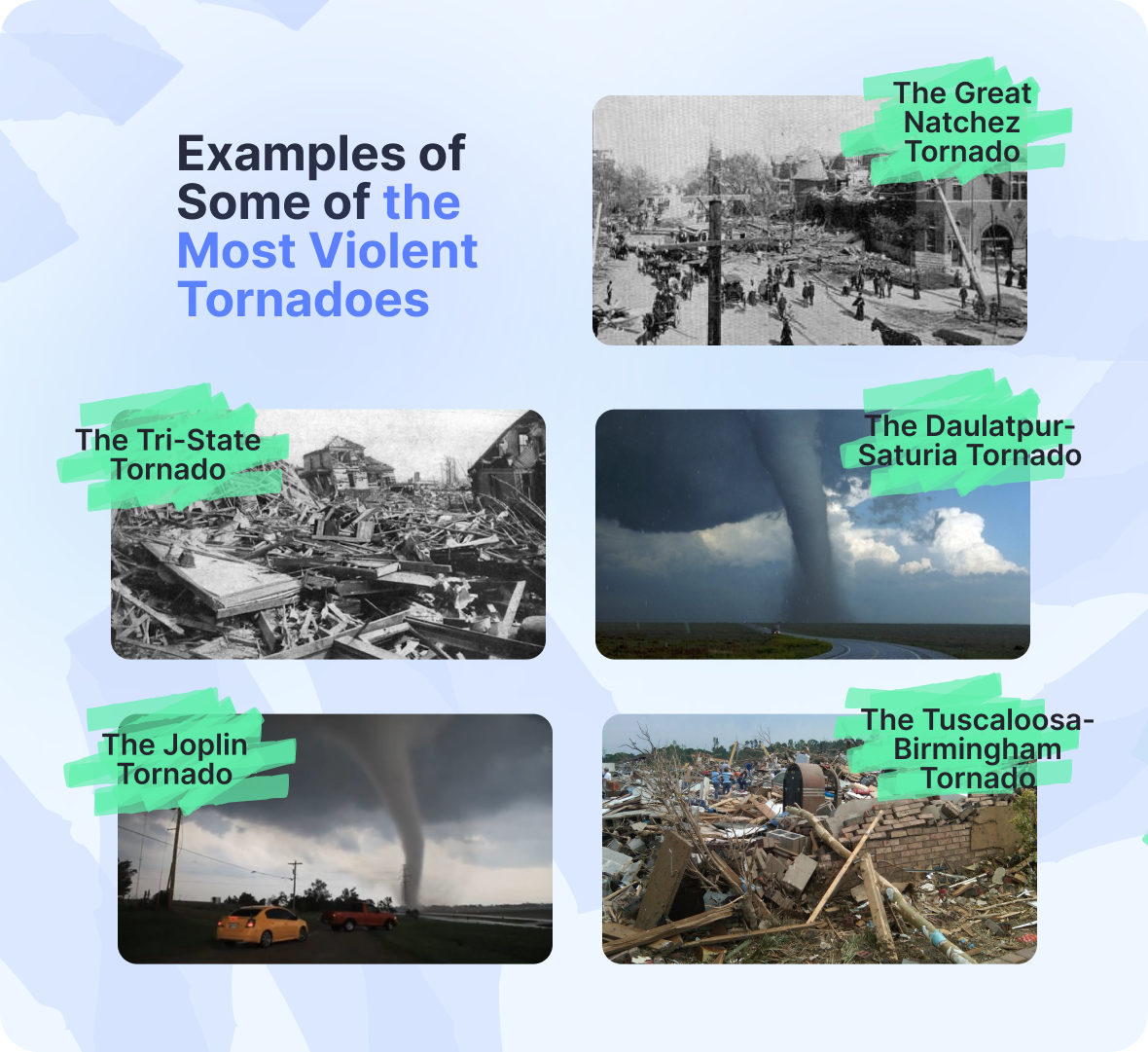
Tornado is a destructive and powerful force that causes serious damage in nature and claims numerous lives.. Here are some examples of the worst tornadoes that have occurred around the world:
Tri-State Tornado - This tornado hit Missouri, Illinois, and Indiana in the United States on March 18, 1925. It is the deadliest tornado in US history, claiming 695 lives and injuring thousands of more.
Daulatpur-Saturia Tornado - This tornado hit Bangladesh on April 26, 1989, and is considered the deadliest tornado in world history. It killed an estimated 1,300 people and injured another 12,000.
Joplin Tornado - This tornado hit Joplin, Missouri, in the United States on May 22, 2011. It was one of the most destructive tornadoes in US history, killing 158 people and injuring more than 1,000. The tornado caused over $2.8 billion in damages.
Tuscaloosa-Birmingham Tornado - This tornado hit Tuscaloosa and Birmingham, Alabama, in the United States on April 27, 2011. It was one of the deadliest tornadoes in US history, killing 64 people and injuring over 1,500. The tornado caused over $2.45 billion in damages.
The Great Natchez Tornado hit Mississippi and Louisiana in the United States on May 6, 1840. It is considered one of the deadliest tornadoes in US history, killing an estimated 317 people and injuring thousands more.
These examples of tornadoes demonstrate the significant damage and loss of life that can occur when these powerful storms strike. It is vital to take tornado warnings seriously and take appropriate measures to stay safe during these events.
Now that you have all the necessary information on how and why tornadoes form, you can write a well-researched and thorough essay. But if you'd rather pay to write paper, this also sounds like a solution we can offer you.
Effects of Tornadoes
Negative Impacts of Tornadoes
Destruction of Property: Violent tornadoes wreak havoc on buildings, homes, and infrastructure, leaving behind a trail of destruction. From ripping roofs off houses to leveling entire neighborhoods, the sheer force of tornadoes can devastate communities.
Loss of Life: Among the most heartbreaking outcomes of tornadoes is the loss of human life. Despite improved tornado warning systems, tornadoes can strike swiftly and without warning, putting people at risk, especially if they're caught off guard or unable to find shelter in time.
Disruption of Communities: Tornadoes bring chaos to entire communities, displacing residents and disrupting essential services. Transportation networks grind to a halt, businesses shutter their doors, and schools close as communities grapple with the aftermath. Cleanup and rebuilding efforts often stretch on for months or even years.
Impact on the Economy: The most violent tornadoes take a heavy toll on the economy, with costs stemming from property damage, lost income, and emergency response efforts. Businesses face interruptions and loss of clientele, compounding the economic strain on affected areas.
Psychological Effects: The emotional scars left by tornadoes can be long-lasting for both individuals and communities. Survivors may struggle with PTSD, anxiety, and depression as they come to terms with the trauma of the disaster and its aftermath. Mental health support is crucial for healing and recovery.
Positive Impacts of Tornadoes
Ecological Renewal: Tornadoes can spark ecological renewal by creating openings in forests, allowing sunlight to penetrate and stimulate new growth. This boosts biodiversity as various plant and animal species thrive in the newly enriched environment, contributing to a more vibrant ecosystem.
Nutrient Redistribution: Tornadoes lift and transport soil, organic matter, and debris, redistributing nutrients across landscapes. This nutrient cycling enriches soils, promoting fertility and supporting plant growth in different areas, ultimately contributing to healthier ecosystems.
Geomorphological Changes: Even the deadliest tornado reshapes the land surface through erosion and deposition, leading to diverse landforms and geological features. While excessive erosion can be harmful, moderate erosion helps create valleys, ridges, and river channels, enhancing landscape diversity and ecological resilience.
Scientific Research Opportunities: Tornadoes offer valuable research opportunities to deepen our understanding of severe weather phenomena. Scientists study tornadoes to gather data on their formation, behavior, and impact, which can inform advancements in meteorology, engineering, and disaster preparedness, ultimately improving our ability to forecast and mitigate tornadoes.
Community Resilience and Solidarity: Despite their destructive nature, tornadoes often foster resilience and solidarity within communities. Neighbors come together to assist in cleanup efforts, rebuild homes, and offer support to those affected. This sense of community spirit and cooperation strengthens social bonds, enhancing the resilience of communities in the face of future natural disasters.
Tornado Essay Example
In this section, we'll carefully analyze the sample essay. You'll see how each paragraph on tornado is structured and learn more about the topic.
Aftermath and Recovery: Rebuilding Communities Post-Tornado
Introduction:
In the wake of a devastating tornado, communities are often left grappling with the destruction and upheaval wrought by nature's fury. From shattered homes to disrupted infrastructure, the aftermath of a tornado can be profound and far-reaching. However, amidst the chaos and despair, there lies a resilient spirit that drives communities to come together, rebuild, and emerge stronger than before. This essay explores the challenges and triumphs of rebuilding communities in the aftermath of a tornado, highlighting the resilience, solidarity, and hope that characterize the recovery process.
Body:
Before communities can begin the rebuilding process, they must first assess the extent of the damage inflicted by the tornado. This often involves surveying affected areas, documenting destruction, and evaluating the condition of homes, businesses, and public infrastructure. Teams of emergency responders, engineers, and local officials work tirelessly to conduct damage assessments and prioritize areas in need of immediate attention.
Immediately following a tornado strike, emergency response teams mobilize to provide life-saving assistance and stabilize affected areas. Search and rescue operations, medical aid, and establishing emergency shelters for displaced residents are paramount. Nonprofit organizations, government agencies, and volunteers unite to distribute essentials, offering a lifeline to communities in crisis.
Reconstructing a community's physical infrastructure is a monumental task requiring meticulous planning, coordination, and resources. Engineers and construction crews repair roads, bridges, and utilities, restoring vital services and reconnecting communities cut off by destruction. Meanwhile, homeowners and businesses face the daunting challenge of rebuilding and navigating insurance claims, permits, and financial assistance programs.
Beyond the tangible impacts of tornado damage, communities grapple with the emotional toll on residents' mental health and well-being. Survivors may experience grief, trauma, and anxiety, struggling with loss and insecurity. Mental health professionals, counselors, and community support networks play a crucial role in providing emotional support and resources to help individuals cope with the aftermath.
Despite facing immense challenges, tornado-affected communities demonstrate remarkable resilience, solidarity, and compassion. Neighbors rally together to clean up debris, rebuild homes, and provide support, forging bonds that strengthen the community. Through acts of kindness, generosity, and perseverance, communities overcome adversity, charting a path toward recovery and renewal.
Conclusion:
In conclusion, while tornadoes leave communities shattered and scarred, they also reveal the indomitable human spirit. United in resilience, communities come together to rebuild, embodying the power of solidarity, hope, and perseverance in the face of adversity. As homes are rebuilt, infrastructure restored, and wounds healed, tornado-affected communities exemplify resilience in the aftermath of devastation.



.png)